
A different kind of juried member exhibition…
Featuring work from Members:
Sharon Bibeault, Jeff Buttel, John Femino, Donald Johnson, Benson Margulies and Keith Prue
Presented in tandem with:
Curious Conversations by Gail Samuelson in the Focus Gallery
One of three annual member exhibitions here at the Rhode Island Center for Photographic Arts, this Spotlight series was conceived as a way to present ideas that carry across a group of images and to shine a light on our members. This juried exhibition provides the selected members the opportunity to present a larger selection of images than a typical juried show allows. As a viewer I hope you enjoy this expanded look at the members featured and the different ways they assembled a selection of images to present an idea beyond a single frame.
This annual exhibition series provides an opportunity and a challenge to our members, to explore how photographs can work together… for some it is a new concept, for others it is an incentive to finish projects already in progress or share something new. I’m happy to provide this opportunity to present the work of our members and celebrate their ability, commitment and the time invested to realize these ongoing projects. For gallery visitors and members alike, I would encourage you to consider how each series of images alters your perception of the single image… Sequence, editing and storytelling across a series of images are all elements beyond the capture process that I encourage you all to explore and constantly re-examine.
A special thank you to all the members who submitted projects for consideration and to all our members for their ongoing support.
– David DeMelim,
Managing Director,
RI Center for Photographic Arts
Opening Reception: August 20th, 5:00 – 8:00 p.m.
Exhibition: Thursday, August 20th thru Friday, October 9th
Featuring work from Members:
Sharon Bibeault, Jeff Buttel, John Femino, Donald Johnson, Benson Margulies and Keith Prue

From the Juror: Neal Rantoul
The level of work submitted was universally very high. For this contest I particularly enjoyed seeing bodies of work, rather than individual photographs. I work in series myself so felt comfortable in judging the submissions. Making still photographs that fit into some sort of narrative, that tell a story or have a beginning, middle and an ending is a way of making our work more substantive and relating a share experience. I commend the winners and wish all who submitted the best with their work.
About the Juror: Neal Rantoul
Neal Rantoul is an active member of the photographic community teaching workshops, sitting portfolio reviews having previously served on the boards of the PRC in Boston and the Griffin Museum of photography in Winchester among others. Neal was head of the Photography Program at Northeastern University in Boston, and previously taught at Harvard University. Neal now devotes his efforts full time to making new work and actively exhibiting his works. Neal has published a number of books with more on the way. Neal’s work is widely collected and is in the museum collections of the Peabody Essex Museum, Fogg Art Museum, DeCordova Museum and Sculpture Park, Bibliotheque Nationale, Paris, France. The Museum of Fine Arts, Boston. High Museum of Art, Kunsthaus, Zurich, Switzerland, and the RISD Museum among others.
Sharon Bibeault

Artist Statement: Traveling with Grief / Searching for Hope
I lost my husband on March 14, 2020 to pancreatic cancer. As 2026 approached, I realized all the days of the weeks would again align with the actual days in 2020 when he was sick and eventually died. I was also having difficulties dealing with the season change from summer to fall. I hate how everything dies.
“Grief is the price you pay for love”
quoted by Maggie Smith in the movie “A Boy called Christmas”
There are five stages of grief:
Denial, Shock and Numbness
Bargaining
Depression
Anger
Acceptance
I have experienced all of them. The one thing I have learned is that everyone grieves in their own way. They grieve differently for a parent, a child, a spouse or a friend. Everyone’s timeline is different, but the one universal is, you never “just get over it”
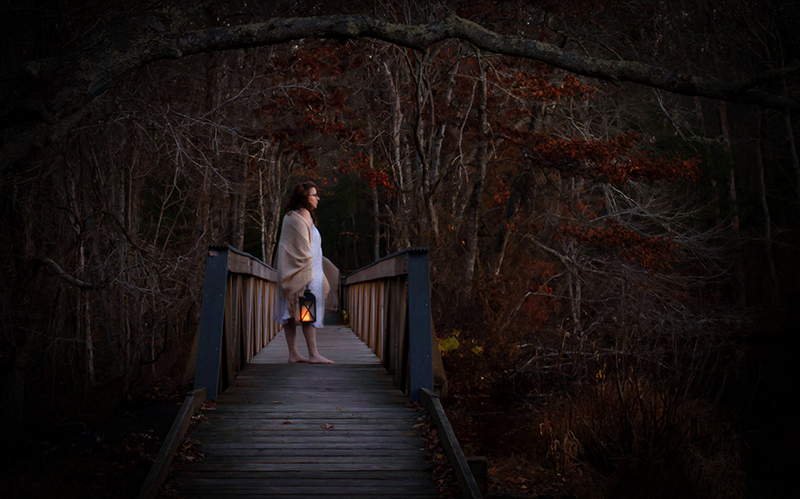
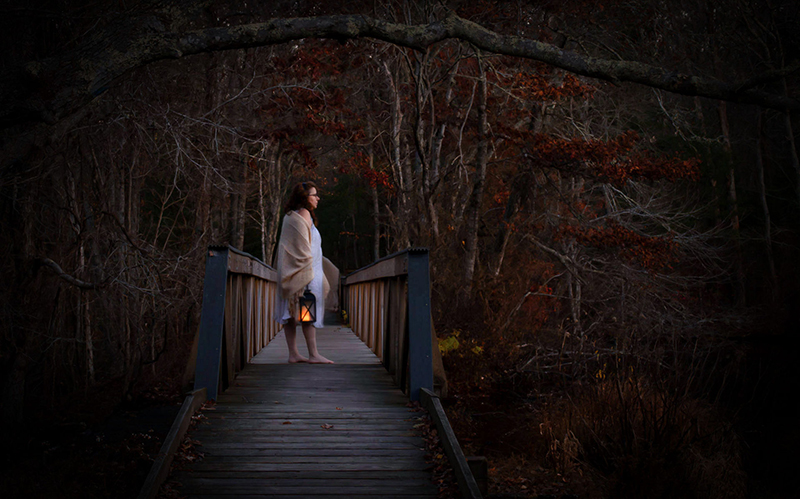
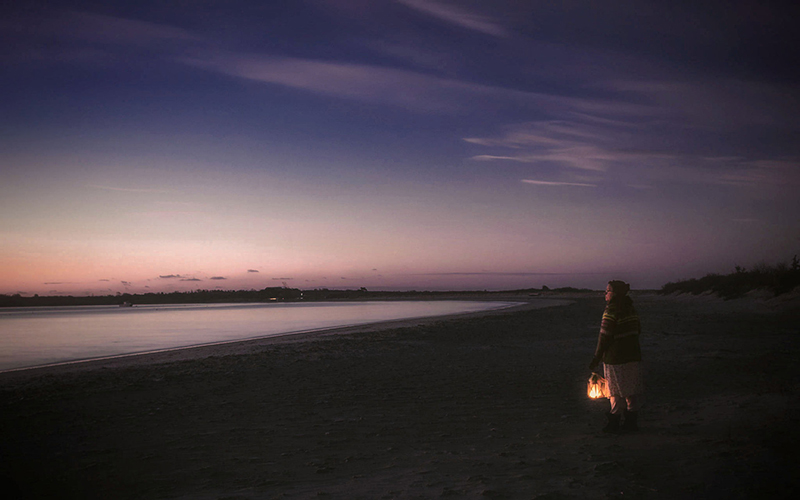
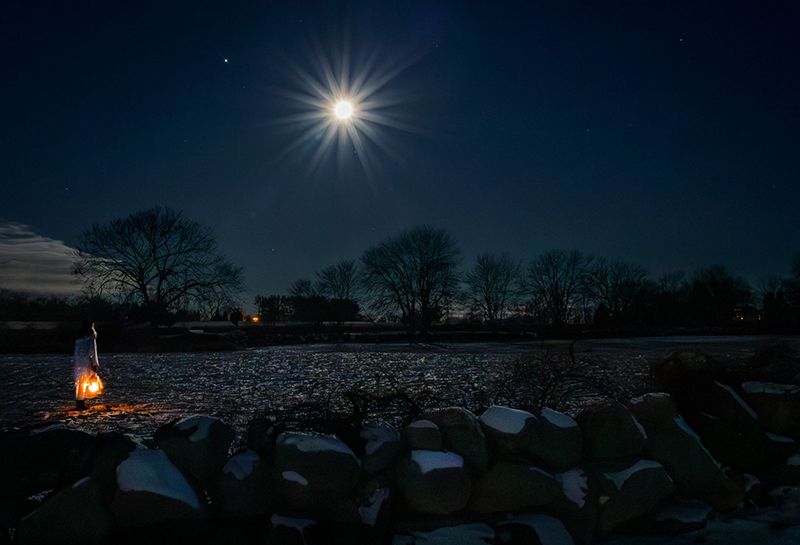
I documented my five stages grief using the progression the seasons, to mark where I had been and where I am now. Death is represented by Fall. Coldness and loneliness are represented by Winter. Trying to move forward by Spring. And finally, Summer, Summer is learning to live with it, learning to carry it at my side, instead of letting it carry me.
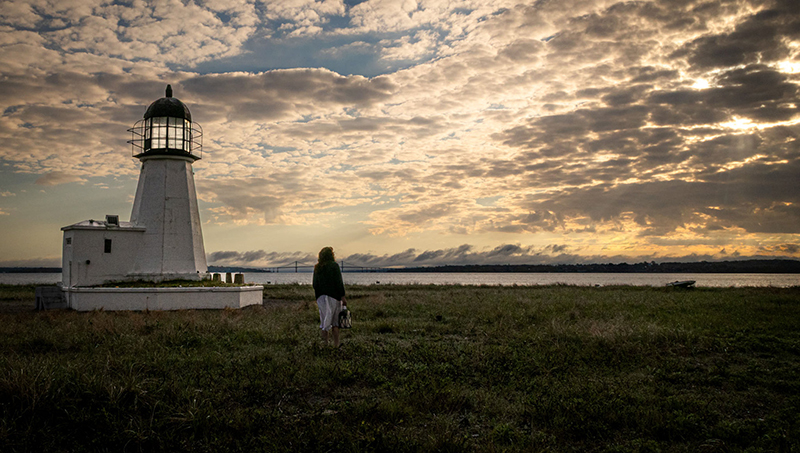
The one constant I carried throughout the project was the lighted lantern, a symbol of my trying to find the light in the darkness. Darkness from the abandonment of friends and family. After the death of my husband, I had started a project, to photograph all the lighthouses in New England, I’m still working on it, but I found it fitting to end this series at the last lighthouse I needed to photograph in Rhode Island, the lighthouse on Prudence Island Light.
Lighthouses are a symbol of hope. And hope is what I now have after my long journey traveling with my grief.
– Sharon Bibeault

Biographical:
Sharon Bibeault was raised and lives in Rhode Island. She has always been interested in photography at an early age. In college she learned the large format 4×5 camera, 2 1/4 and the 35mm cameras. Now that film is being produced again, she has dusted off her 35mm and father’s 2 ¼ cameras. She has become interested in pinhole cameras. She focuses on the fine art aspect of photography and being able to capture a mood or emotion in her work. She likes to play with light and shadows creating the dramatic effects she can achieve. She is curious and open to learning new techniques and styles of photographing her subjects.
She graduated from the only all women’s art college, Moore College of Art and Design in Philadelphia, PA. She majored in Textile Design with a minor in Photography. While there she studied under Judith Steinhauser and David Graham. She has found ways in combining her textiles with photography by printing her photographs on fabric to make small pieces of quilted artwork.
Sharon has exhibited her works at Colorado Photographic arts Center, UNWC Cultural Art Gallery in NC, The Cultural Center of Cape Cod in MA, Pawtucket Art Collaborative in RI, Moore College of Art and Design in Philadelphia-PA, Verum Ultimum Art Gallery in OR, San Fernando Valley Arts and Culture Center in CA, HMVC Gallery in New York, Bristol Art Museum in RI, Praxis Gallery in MN, the Warwick Center of the Arts in RI and Rhode Island Center of Photographic Arts in RI.
Website: smthomasbibeaultdesigns.com
Jeff Buttel

Artist Statement: Double Take
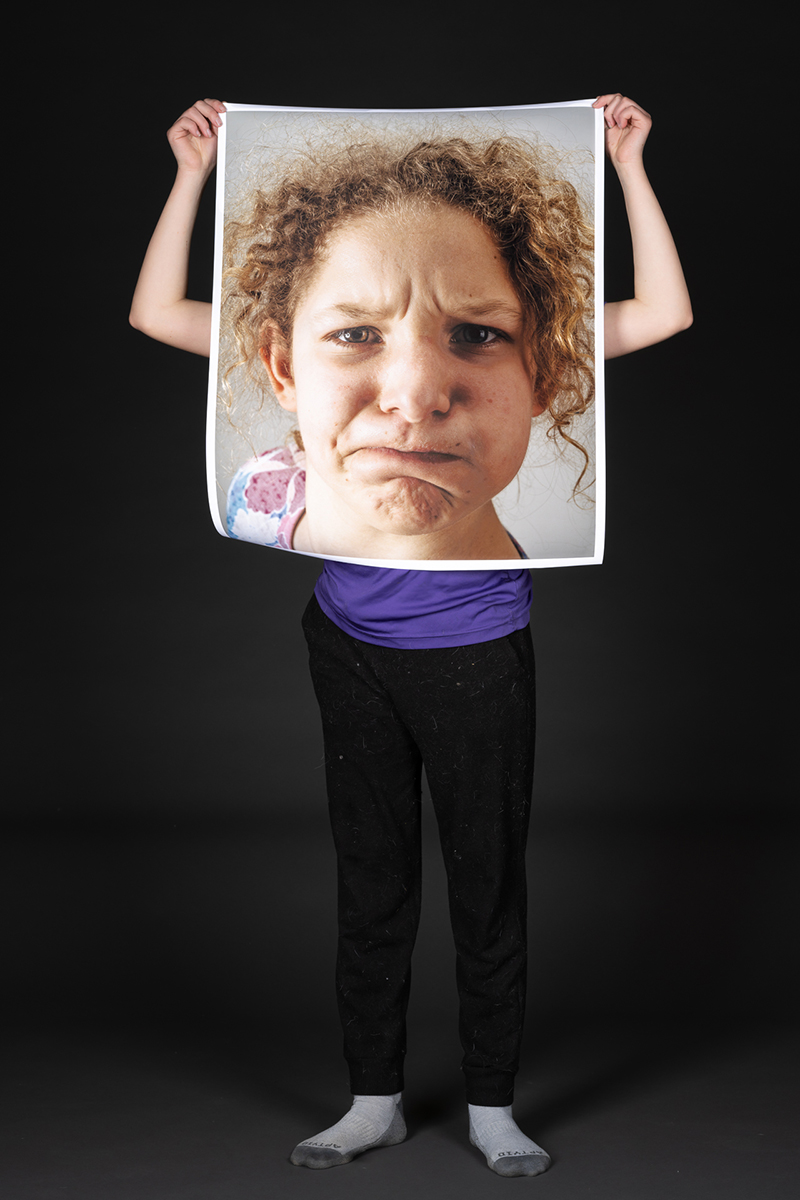
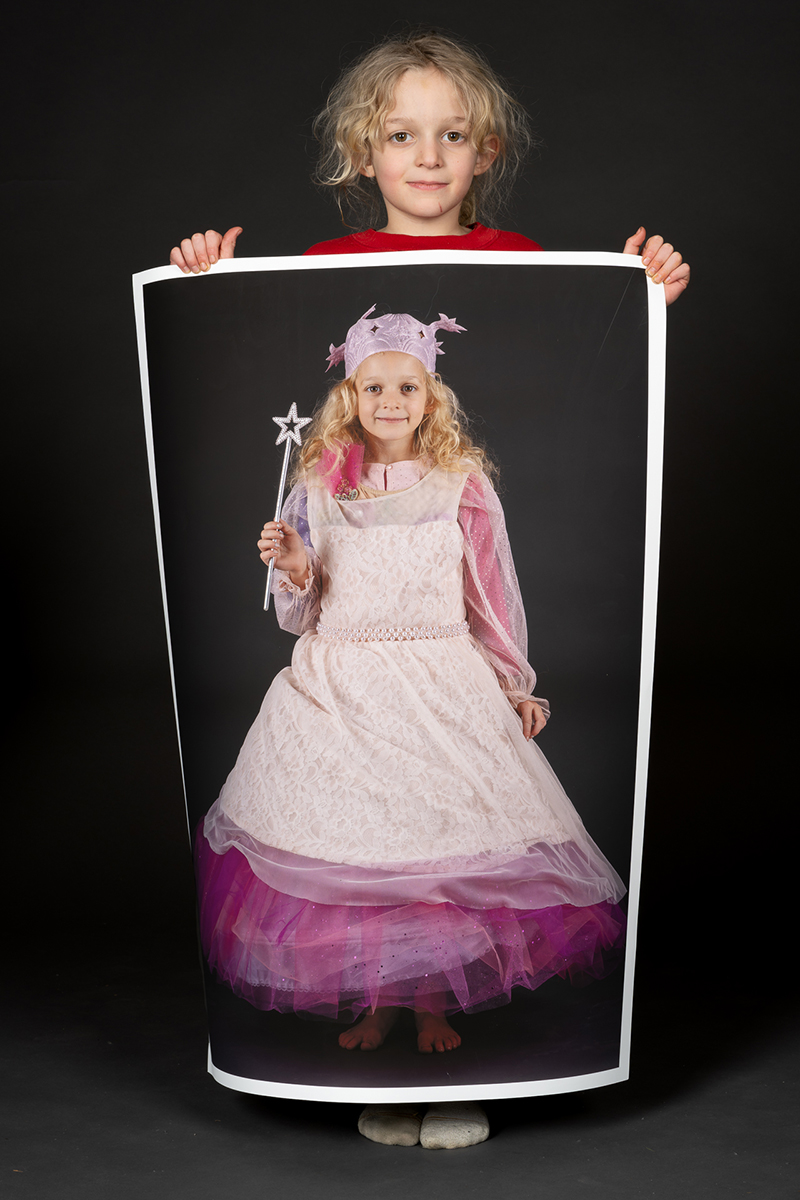
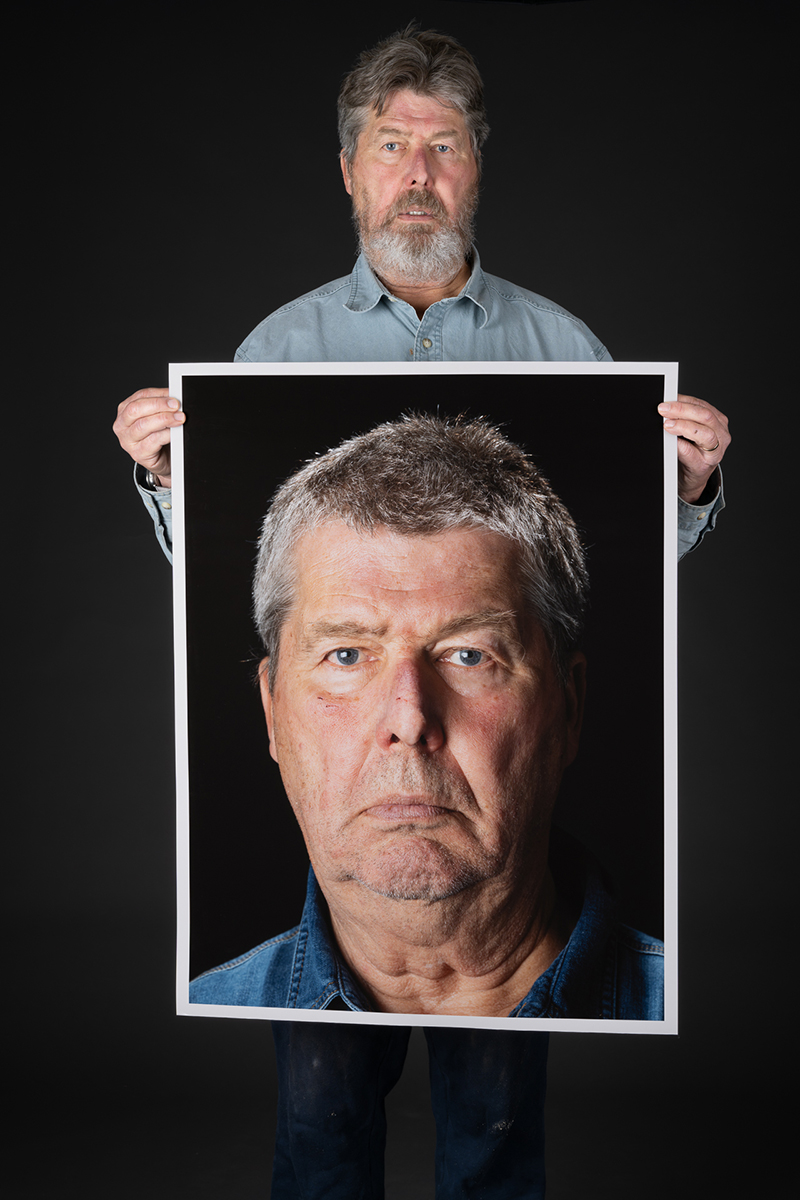
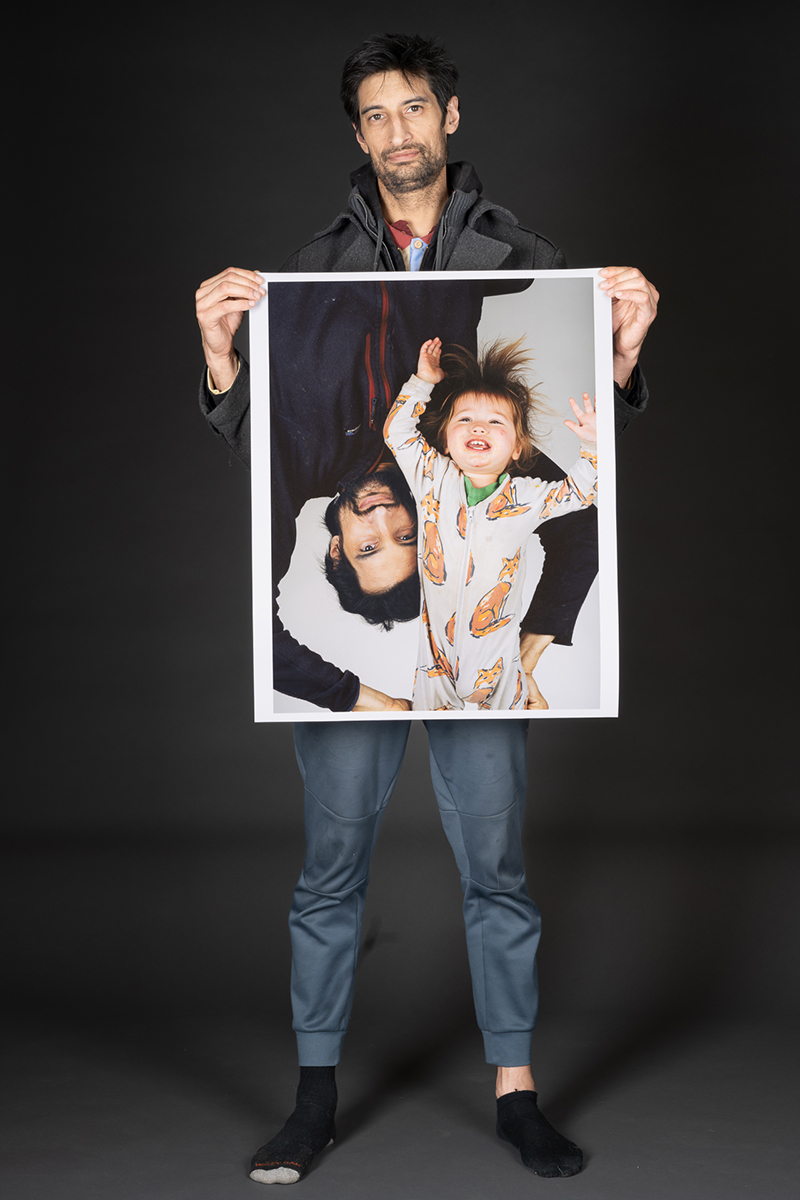
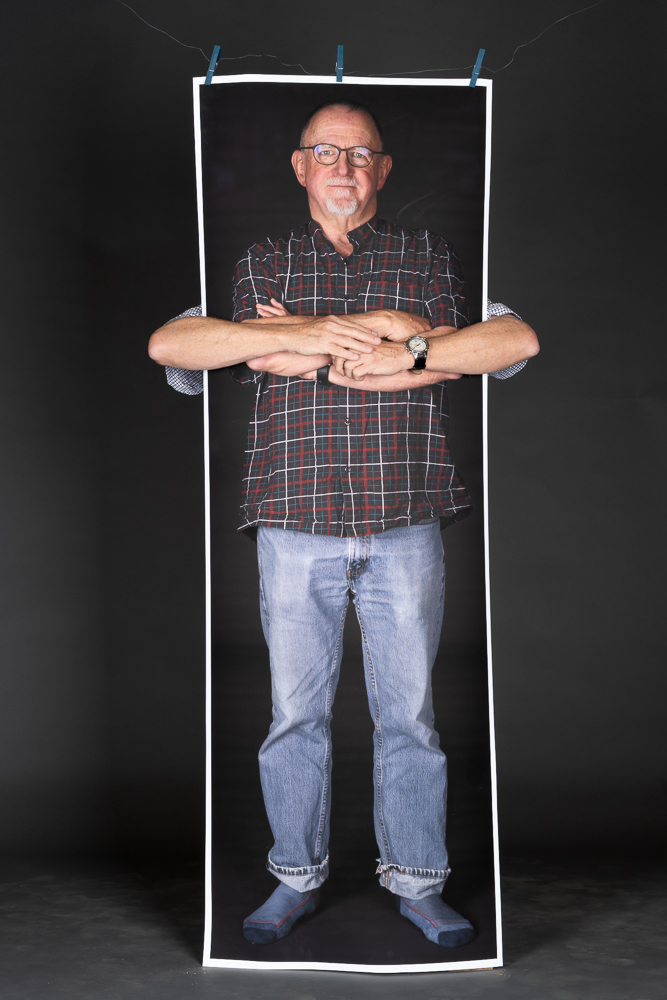
When people come to my house I photograph them, if they are willing, and if my studio is not too much of a mess. I like interacting with people and I try to make each session as collaborative as possible. My most engaging images emerge from working together with my subjects. Lately I have been asking subjects to hold portraits of themselves. Working this way allows the people I photograph to interact with me and themselves.
These photographs are the result.
– Jeff Buttel
Biographical:
I have had several careers in different fields, but I have always done photography. I have studied photography at Beloit College, Maine Media College, and Lesley University. In the business sense my photography is a losing proposition. In a living my life sense, photography is what holds me together.
John Femino

Artist Statement: Still Looking….
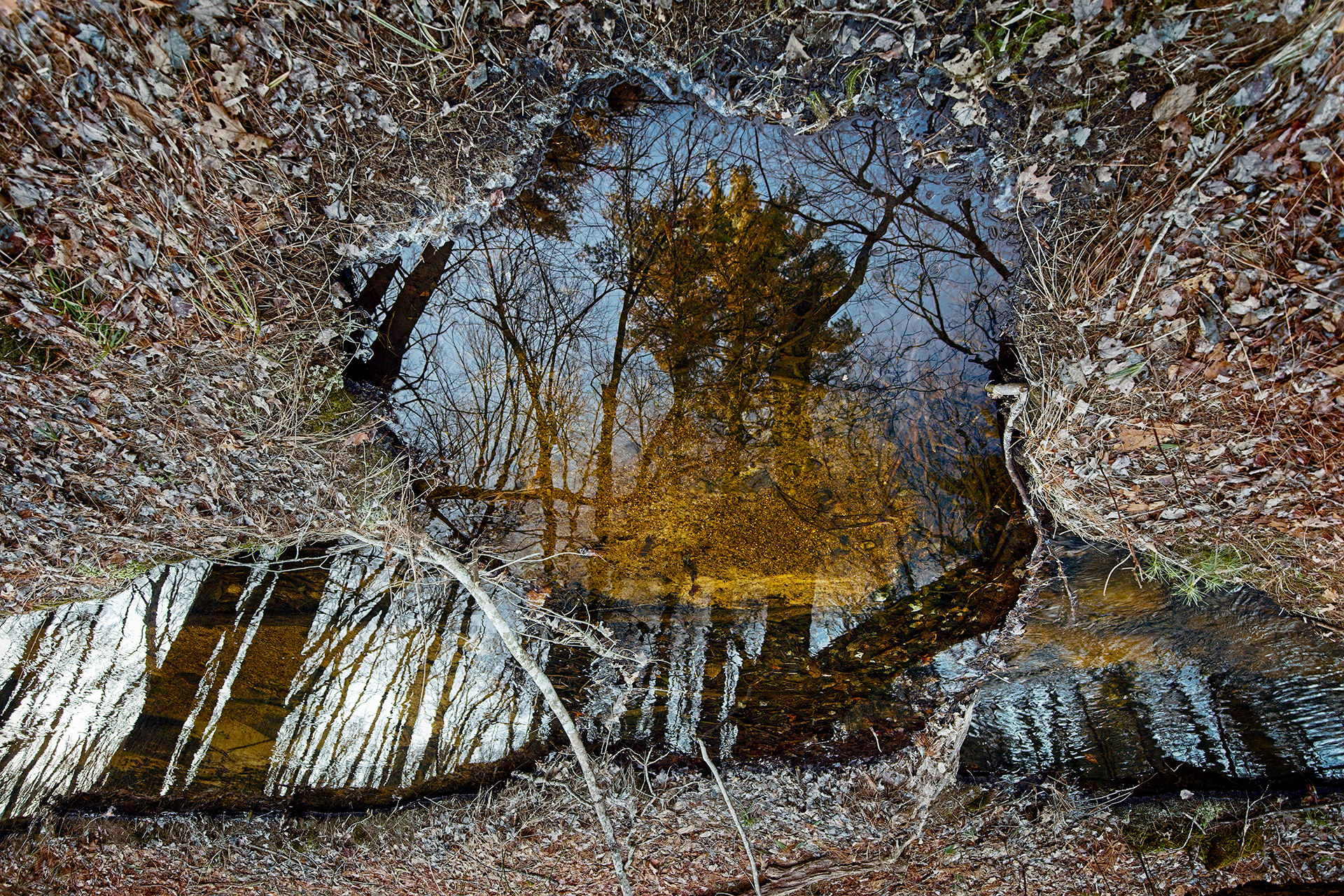
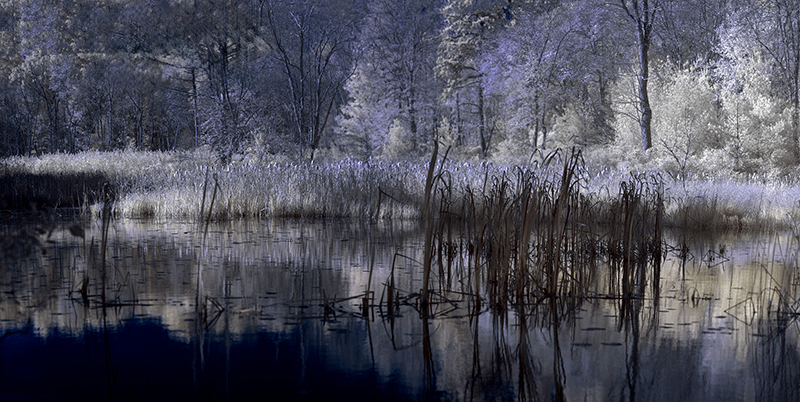
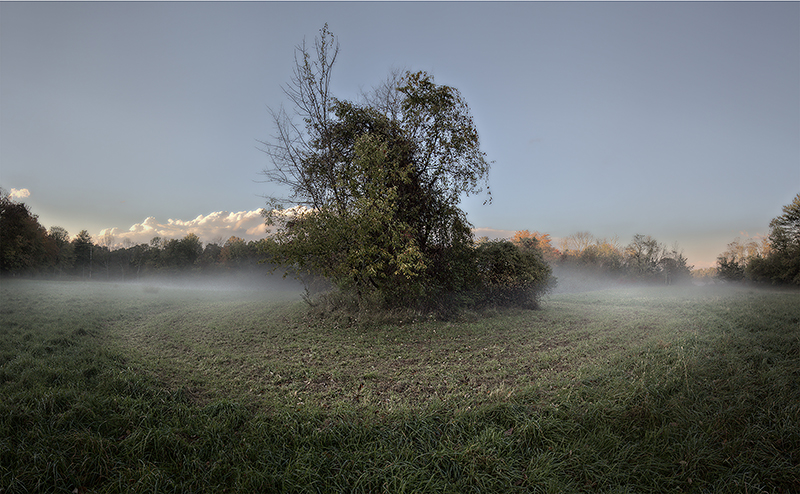
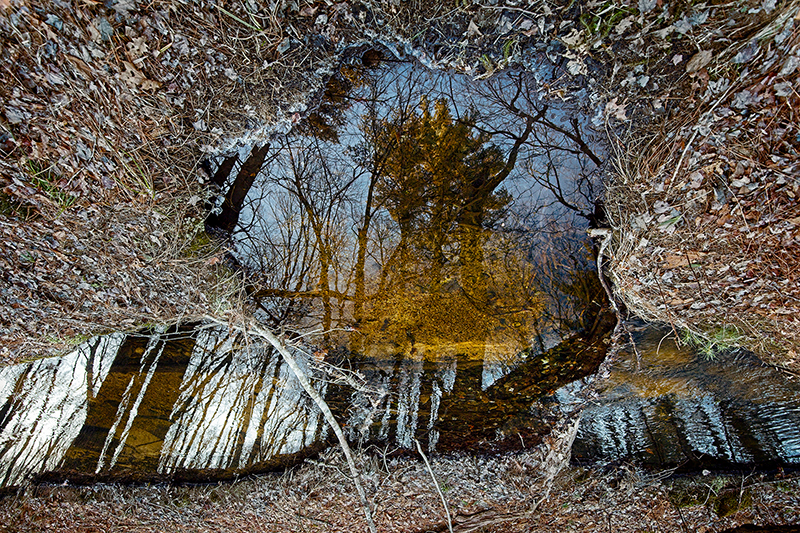
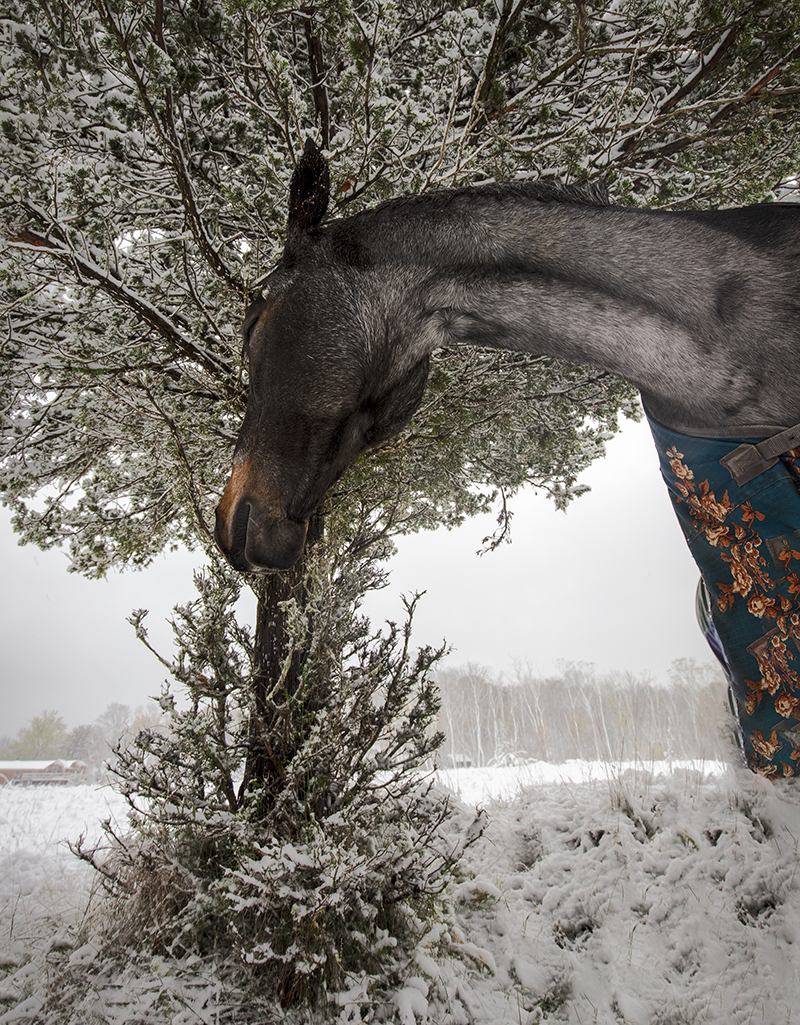
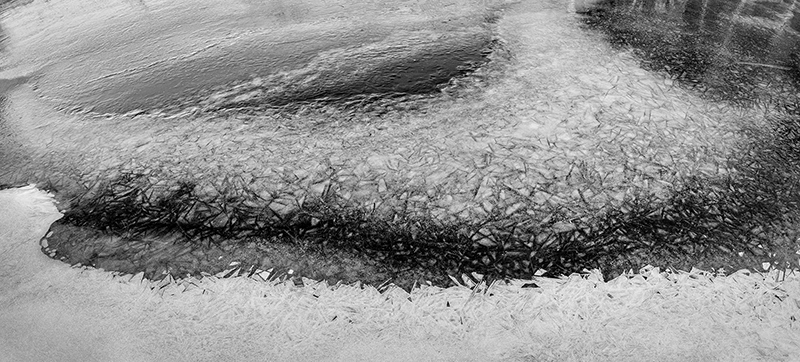
These photographs were not born from a preconceived project. They are what happens when I stop moving and start paying attention — to my farm fields, gardens, and beaver ponds, and to whatever catches my eye on any given day.
I used to consider myself a landscape photographer. I traveled widely, searching for the great American photograph. I stopped doing that. What I found, eventually, is that sustained attention to the same unremarkable places yields something more interesting than the famous ones. I watch the same ground transform — seasonally, hourly, by the angle of light or a shift in weather — into something I no longer recognize as ordinary. The photograph is already there. I just have to be paying attention when it appears.
Textures, ice, reflection, pattern, mist, snow, and the quiet disruptions of the beaver — these are my recurring subjects. Not chosen in advance, but recognized in the moment. Harry Callahan, my mentor at RISD, shaped this way of working. He taught me to photograph every day, and everyday things. Fifty-plus years later, I understand that what he was really teaching was a discipline of seeing — staying present to the place you’re in, rather than chasing the place you think you should be.
– John Femino
Biographical:
I spent a dual career in photography and medicine, the photography continuing quietly alongside the clinical work. Now that I am retired, I have more time to process, print, and look carefully at what I’ve been accumulating. These five images are drawn from that larger archive of farm life — not because they form a traditional series, but because each one stopped me. That, I’ve come to believe, is reason enough.
Website: feminophoto.com
Donald P. Johnson

Artist Statement: Duality
A camera is a box designed to capture light on a photosensitive surface. Historically, photography was mechanically challenging. It required bulky equipment, detailed planning, and a large amount of time. Modern digital technology has made capturing flawless images seem effortless. Recently, however, I have realized that this easy perfection causes me to lose sight of why I am making a photograph in the first place. I find myself yearning for a slower, more deliberate practice that forces me to think, feel, and convey a deeper emotional message.
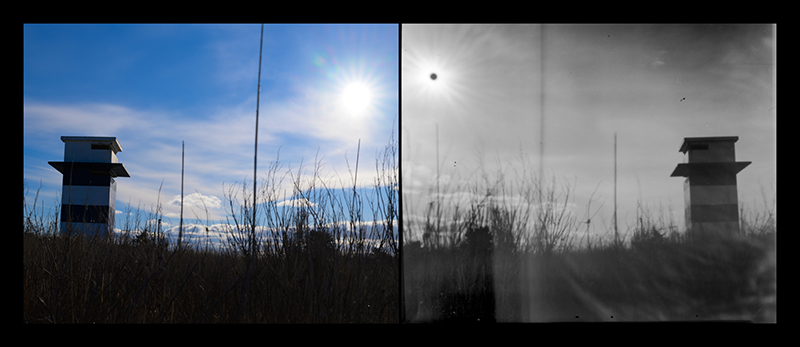
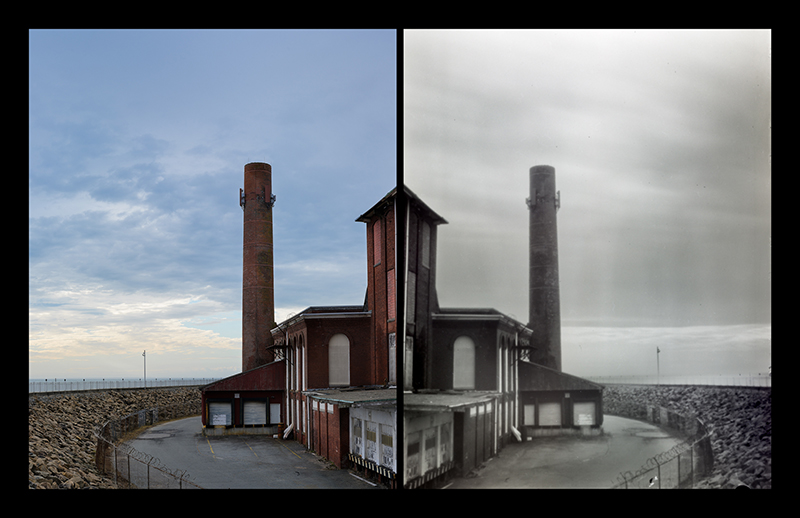
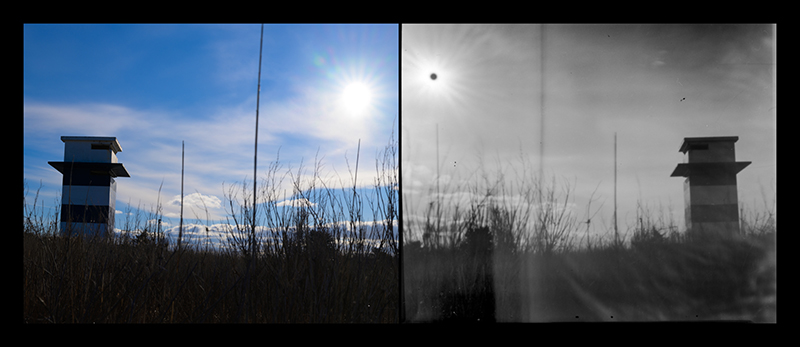
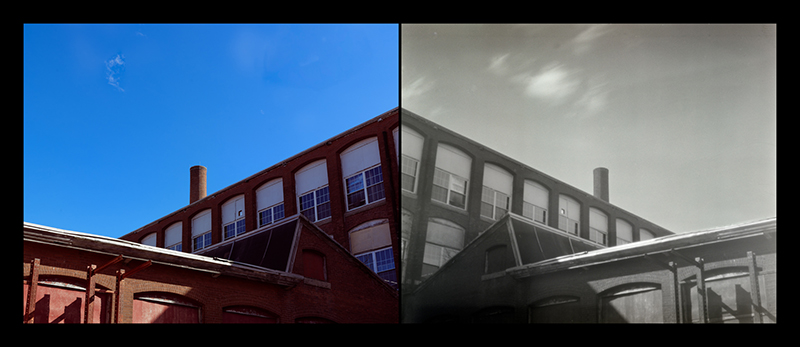
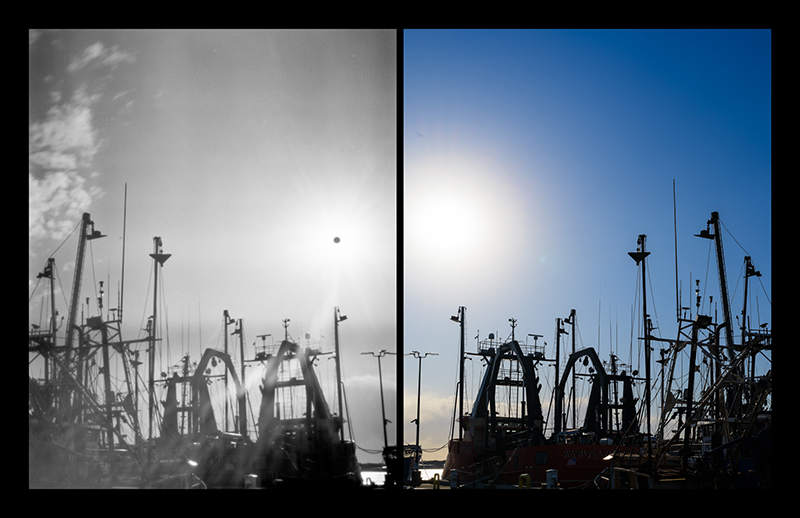
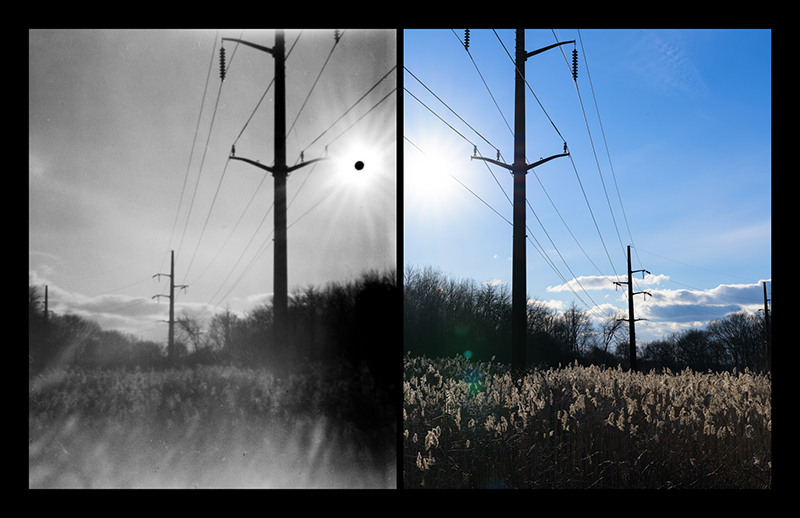
Duality explores two polar opposite approaches to photography. For each frame, I composed the exact same view in and around the city of New Bedford, Massachusetts using a pinhole camera in conjunction with my digital camera. The resulting pair of images required up to 20 minutes of setup and exposure time, followed by additional stages of darkroom development and digital processing to produce the final prints. The time invested, for me, added a much higher value to each piece. It ensured that I paused to think about what the work would mean, and if it was worth capturing and sharing.
The pinhole cameras that I used demanded patience and a surrender to imperfection, offering a direct counterpoint to the potential sterility and effortless nature of my digital camera. By pairing these ethereal analog images with their precise digital counterparts, I invite the viewer to pause and reflect on their own relationship with technology.
– Donald Johnson
Biographical:
Donald P. Johnson is a photographer and technologist based in Dartmouth, Massachusetts. Raised in upstate New York, he spent many years in New York City
before relocating to the South Coast of New England. Donald photographs intimate landscapes, urbanscapes, seascapes, and the convergence of people and nature. Recently, he has turned to alternative analog processes in order to slow down and return to the roots of photography. He hikes to photograph and photographs to hike.
Website: dpj.photography
Benson Margulies

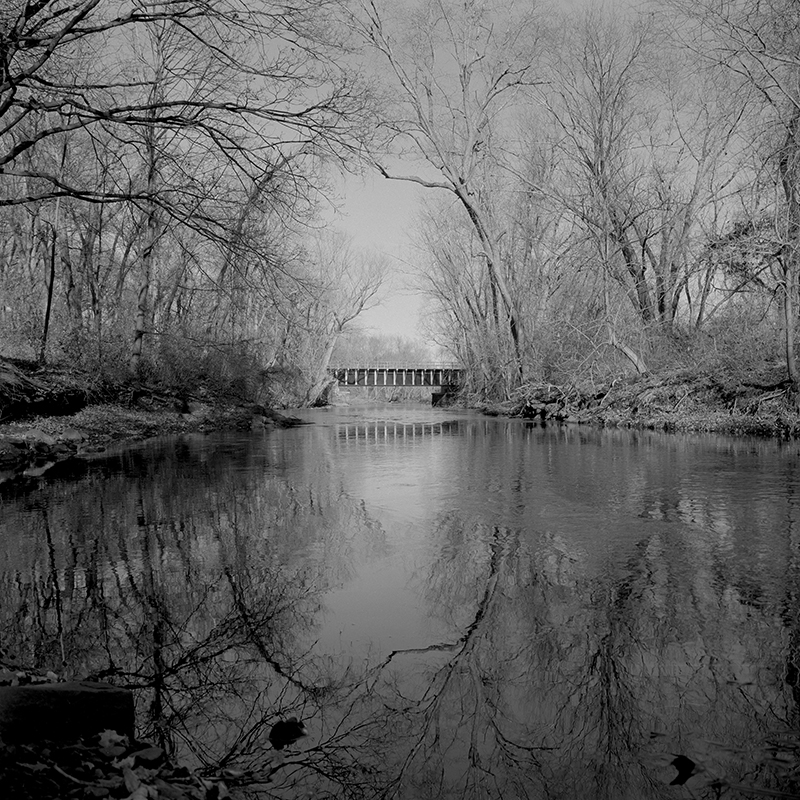
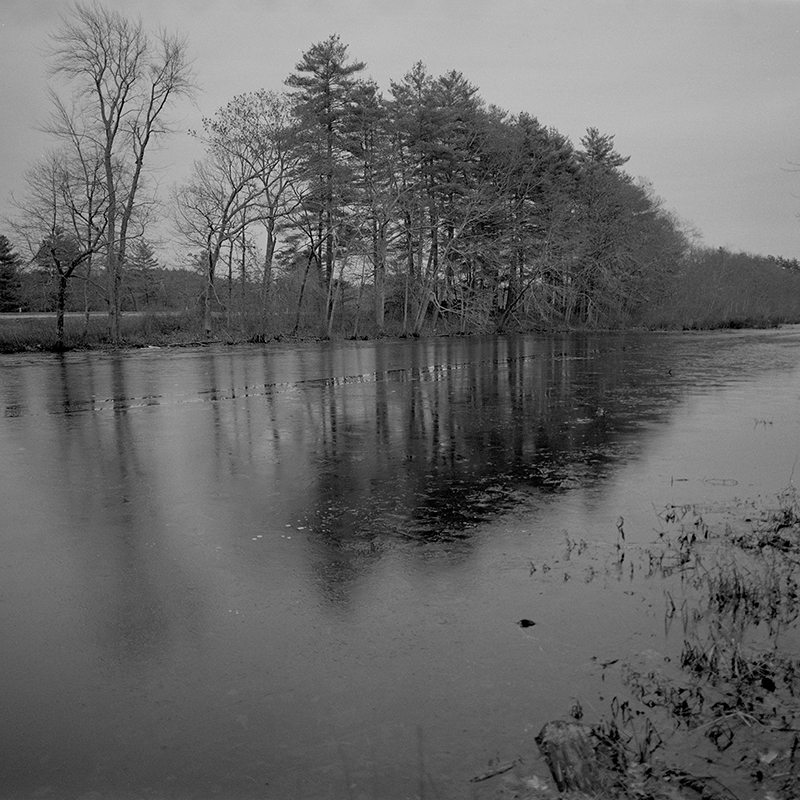
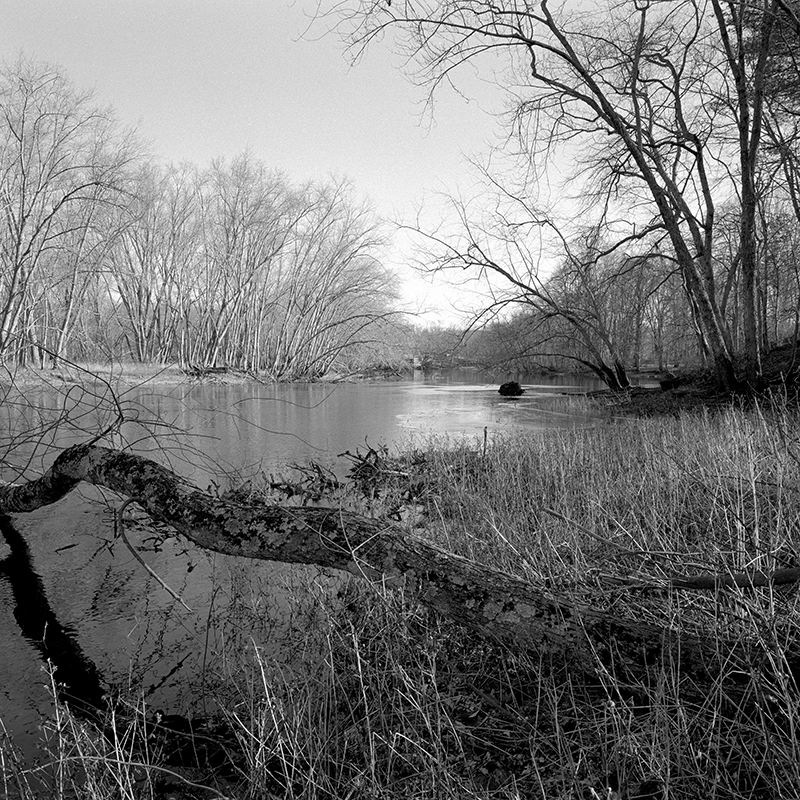
Artist Statement: There is only one river
Fifty years ago, I walked a spit of land in a river. On one side, black water and the night. On the other, street lights shrouded in fog.
Later, I watched through a window as fog engulfed the buildings.
I wrote a poem, “That night, the river was split …”
The poem is long-ago lost.
The next day was full of activity and bright edges. Or it was not. That memory is lost.
There is no path away from loss, but the river persists, though it is never the same river. Perhaps images I make of a river could also persist, though I am also inconstant.
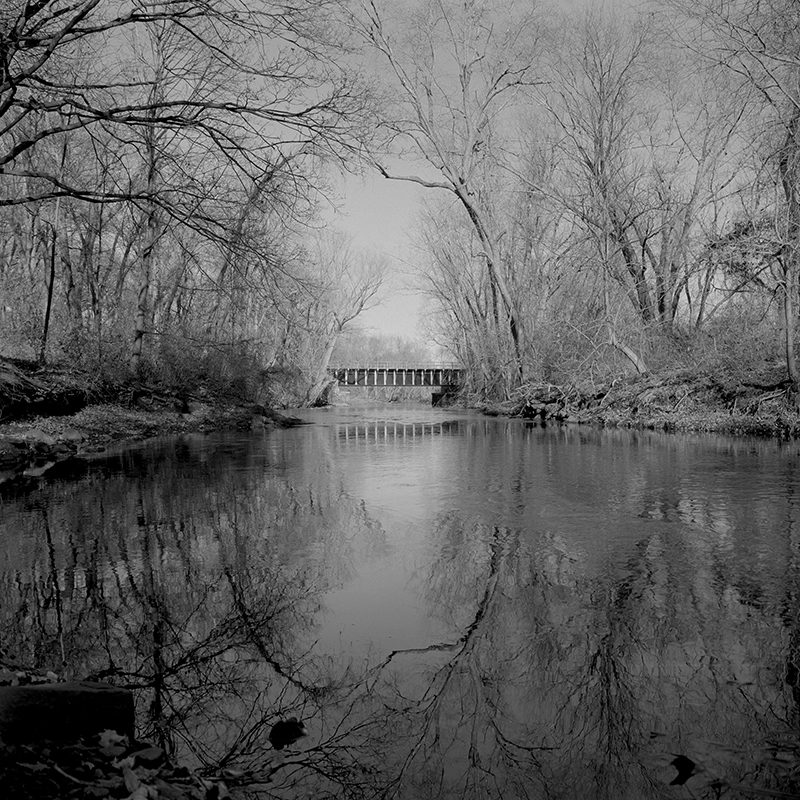
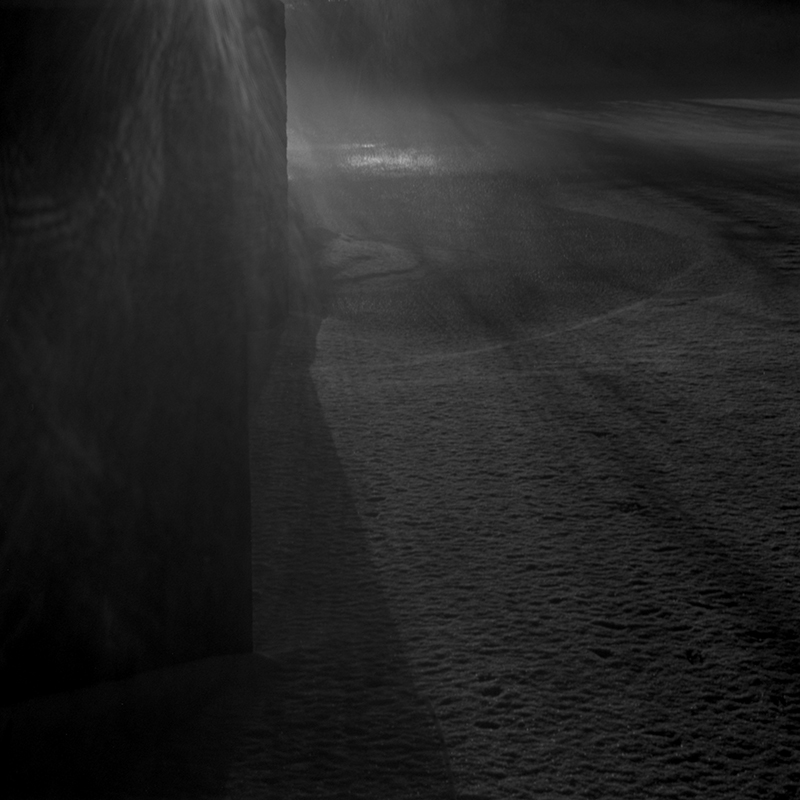
These are my images of the Assabet. There is constancy and instability, clarity and uncertainty, darkness and light.
“Ever-newer waters flow on those who step into the same rivers”. Not only are there disagreements about the translation of the Greek, there are disagreements about the original content. Heraclitus was preserved only in fragments. One fragment seems to be talking about the ever-changing river. Another seems to be talking about the ever-changing person stepping into it. I have been visiting the Assabet River since returning to live here in early 2025. My visits vary in location, season, time-of-day, and weather. I have been literally stepping into the river.
As I slog through mud, ice, and sinewy brambles, I consider that nothing stands still: not text, not the river, and not me. Yet, here I am, freezing time on the freezing river, catching the plants at one instant in their journey from summer to winter, and myself in one spot in the mud.
– Benson Margulies

Biographical:
Benson Margulies was born in middle Pennsylvania, and has been fascinated by the mechanics of photography since the 1960s. He photographed for the MIT yearbook, and later made many images of doors in Florence and rusty fishing boats in Seattle. He has worked with materials ranging from traditional darkroom photography to digital to cyanotypes, and back again. More recently, he has been striving to understand the motivations of his eye beyond a desire to see from multiple perspectives, to which purpose he has studied with Jessica Keener in the deep pandemic and Emily Belz at the Griffin Museum of Photography’s Atelier program.
Benson took a S.B. degree from MIT in 1982, and proceeded to a career in software development and management, with a particular emphasis on human perspective. Since his retirement, he has waded into project-based photographic work along the Assabet River.
Website: bensonmargulies.photography
Keith Prue

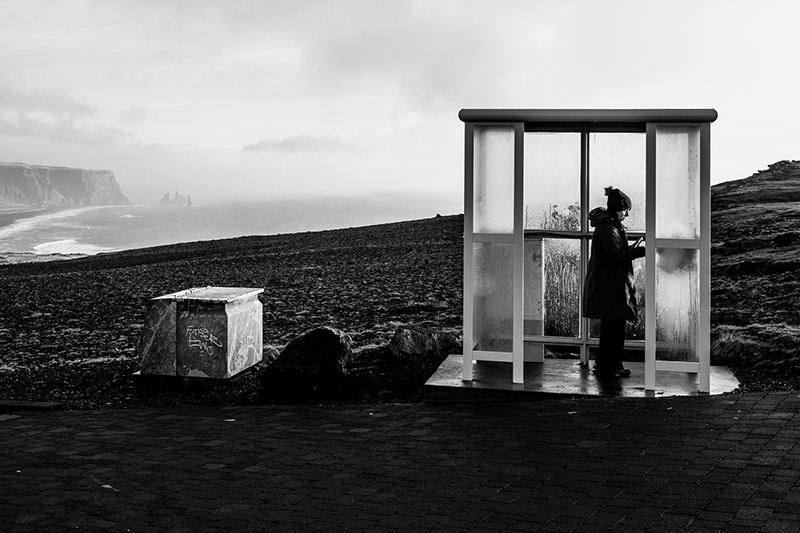
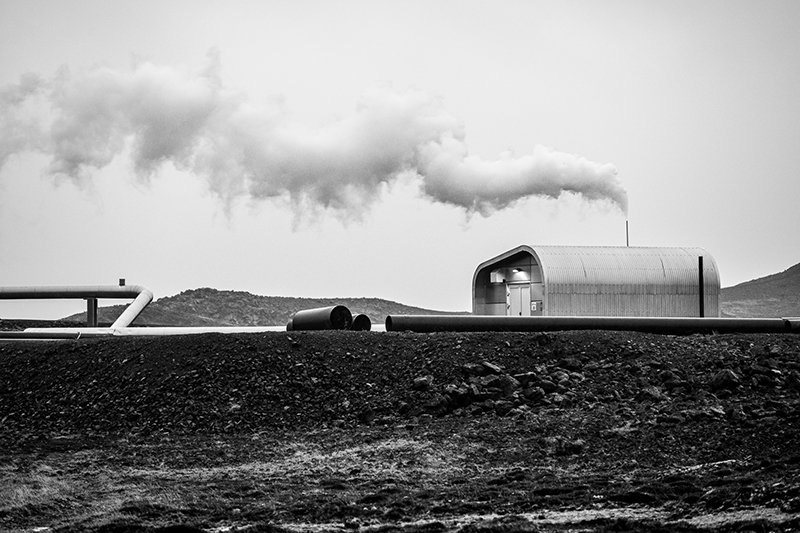
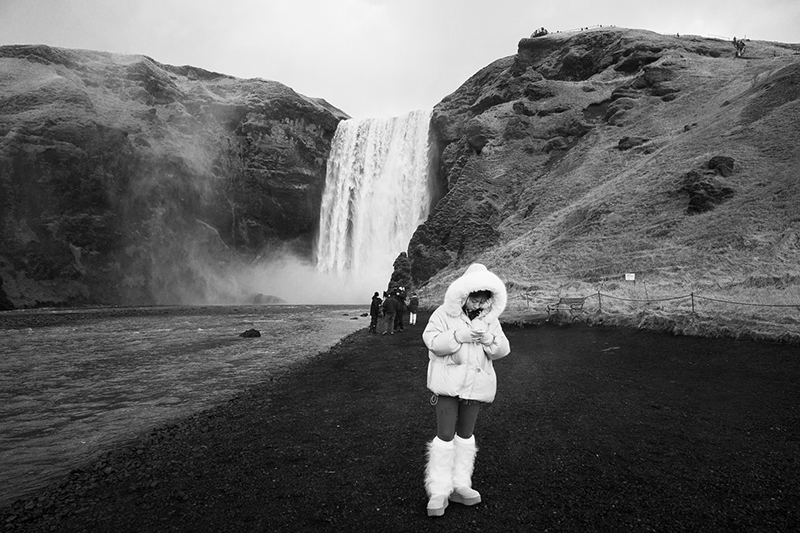
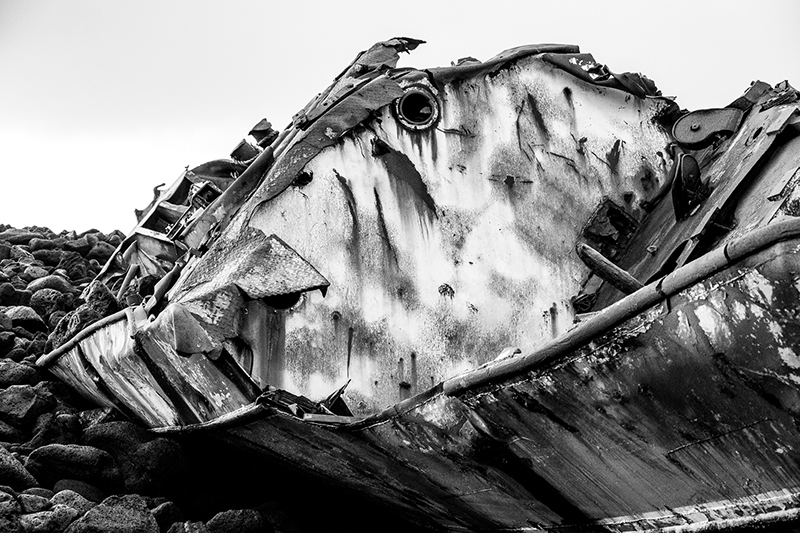
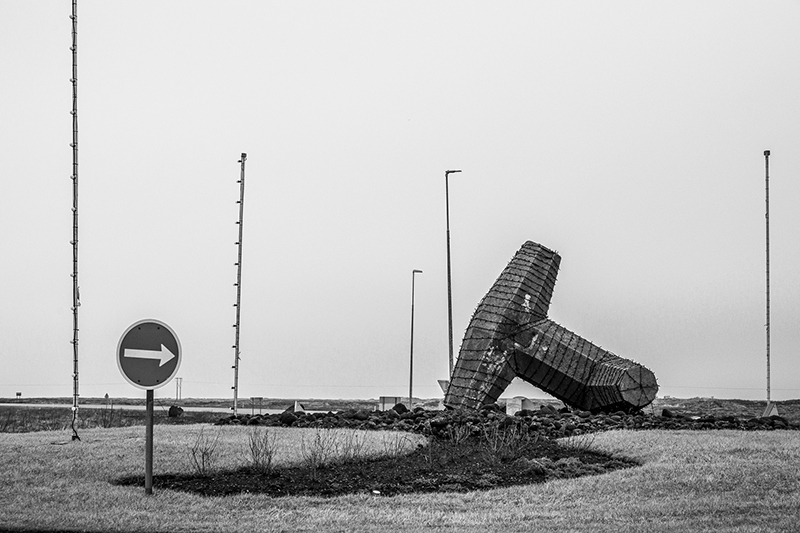
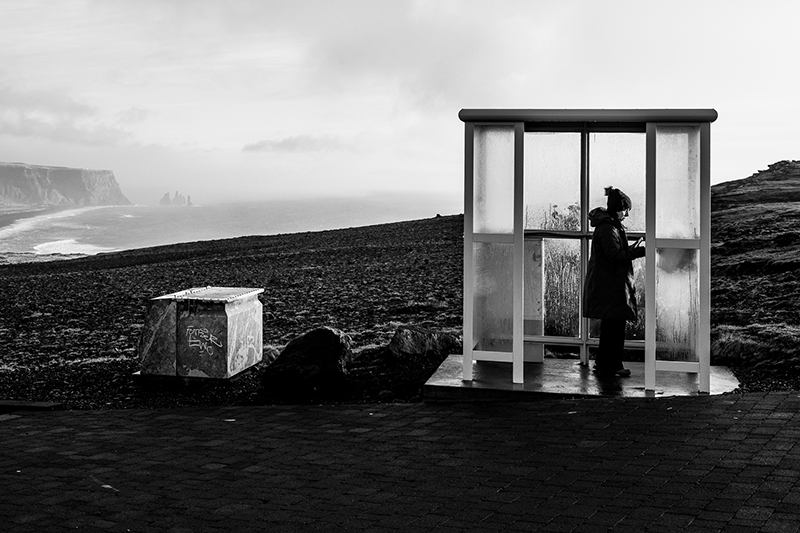
Artist Statement: 1005 miles in Iceland
1005 miles in Iceland
Over ten days in December
Lots of clouds
Lots and lots of wind
But not much sun
And no snow
2025
– Keith Prue
Biographical:
Keith Prue’s photographs challenge us to look at fleeting moments of wonder through the simple pleasure of seeing. Drawing on experience gained from living and working on four continents, and experiencing fifty-six countries and twenty-nine US states, he reflects and contrasts cultural nuances in his work.
Keith’s work has been included in more than eighty exhibitions in the USA, UK, Italy and Mexico, and shown more than eighty times online. He is primarily a self-taught artist but has been inspired and guided by Ernesto Bazan and the late Ben Lifson. Keith lives in Rhode Island, USA.
Website: keithprue.com
Instagram: keithprue
The RI Center for Photographic Arts, RICPA 118 N. Main St. Providence, RI 02903
Located in the heart of Providence, RICPA was founded to inspire creative development and provide opportunities to engage with the community through exhibitions, education, publication, and mutual support.
RICPA exists to create a diverse and supportive community for individuals interested in learning or working in the Photographic Arts. We strive to provide an environment conducive to the free exchange of ideas in an open and cooperative space. Members should share a passion for creating, appreciating, or learning about all forms of photo-based media. We work to provide a platform for artistic expression, that fosters dialogue and drives innovation in the photographic arts.
We are member supported, the first step to membership is registration – https://www.riphotocenter.org/registration Details on membership options can be found at https://www.riphotocenter.org/membership-info
The Gallery at the Rhode Island Center for Photographic Arts is a member of Gallery Night Providence https://www.gallerynight.org
Questions: Contact gallery@riphotocenter.org To learn about other RICPA exhibits and programs, visit https://www.riphotocenter.org
Leave a Reply